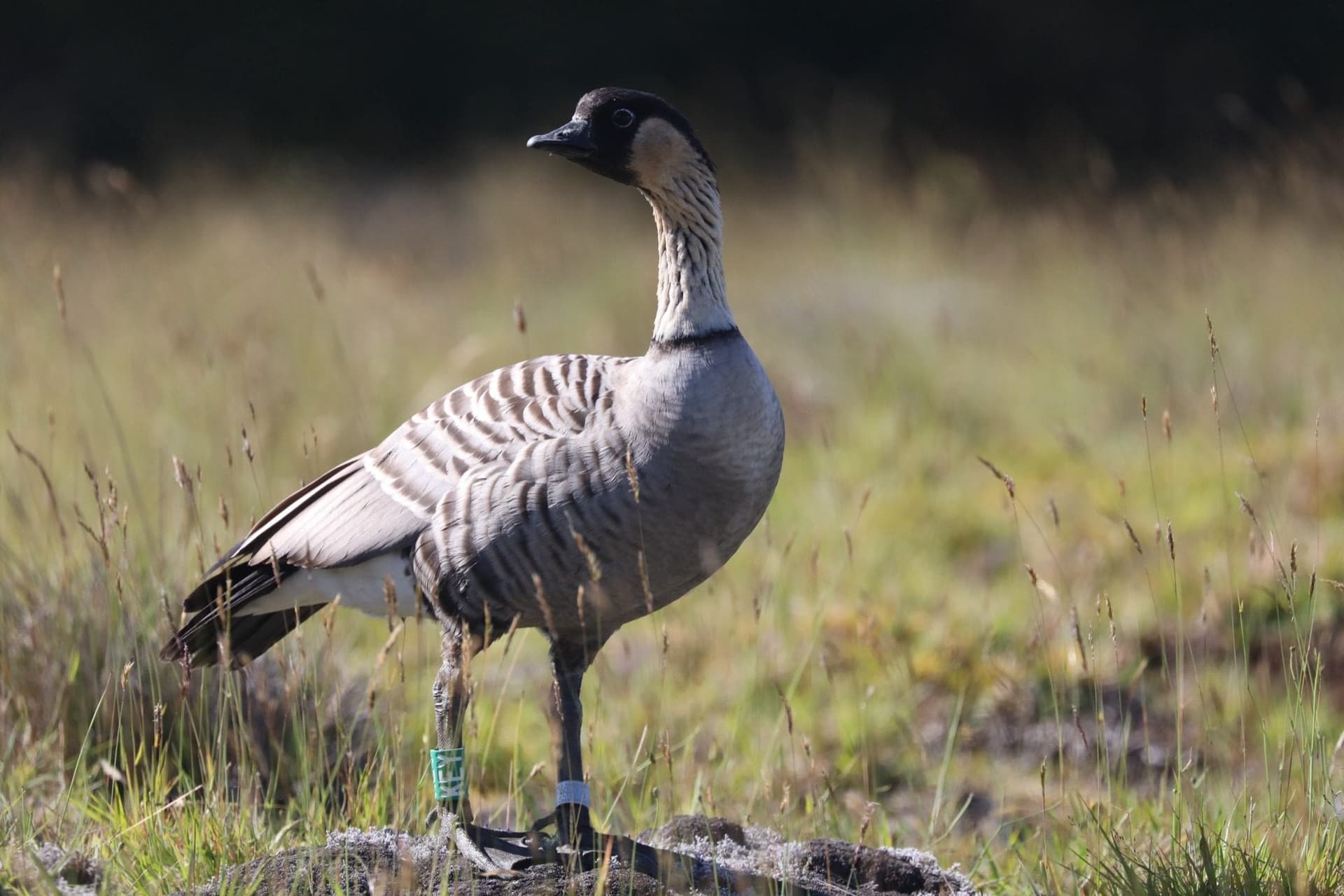
From the shoreline to the summit.
Nēnē move between ranches, refuges, parks, and roadsides on Hawaiʻi Island, Maui, Kauaʻi, and Molokaʻi. A sighting with a photo, a date, and a location helps managers follow individual birds and family groups.
- sightings logged
- 22,992
- community contributors
- 1,187
- nēnē statewide
- 4,323
Sightings and contributors: nene.org database, as of Oct 2026 · Population: NRAG 2025 count
Dry grassland · Hawaiʻi Island · 5,830 ft
One bird, five worlds.
Nēnē live from sea level to above 8,000 feet. Follow them uphill and see what each habitat offers and what puts them at risk.
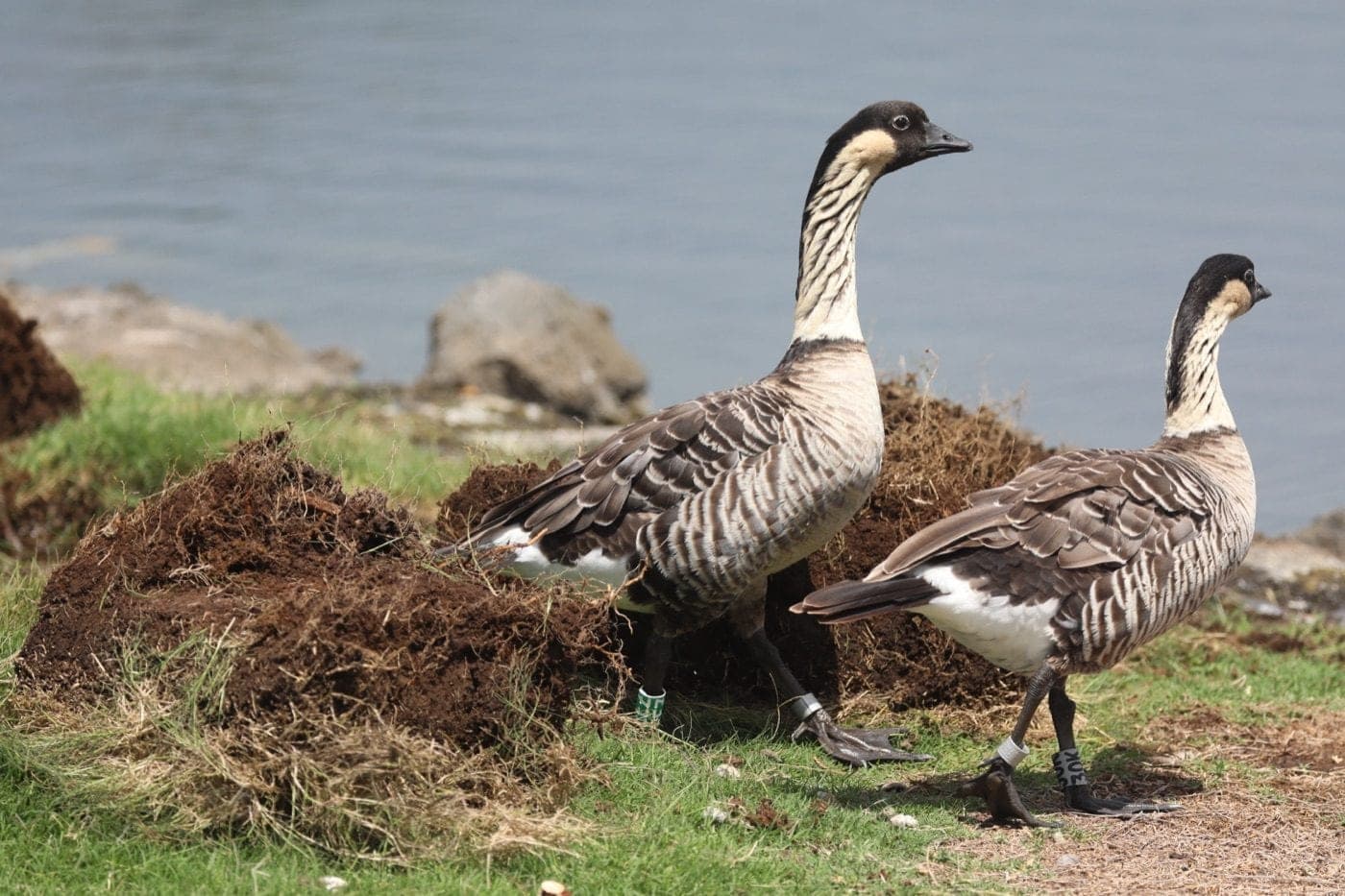
approx. 0–500 ft · Coastal
Shoreline and coastal grass
Nēnē use ponds and shorelines when they're nearby. Coastal lawns and resort grounds give them easy grazing.
What threatens them hereVehicles, dogs, and people feeding them.
Vehicle collisions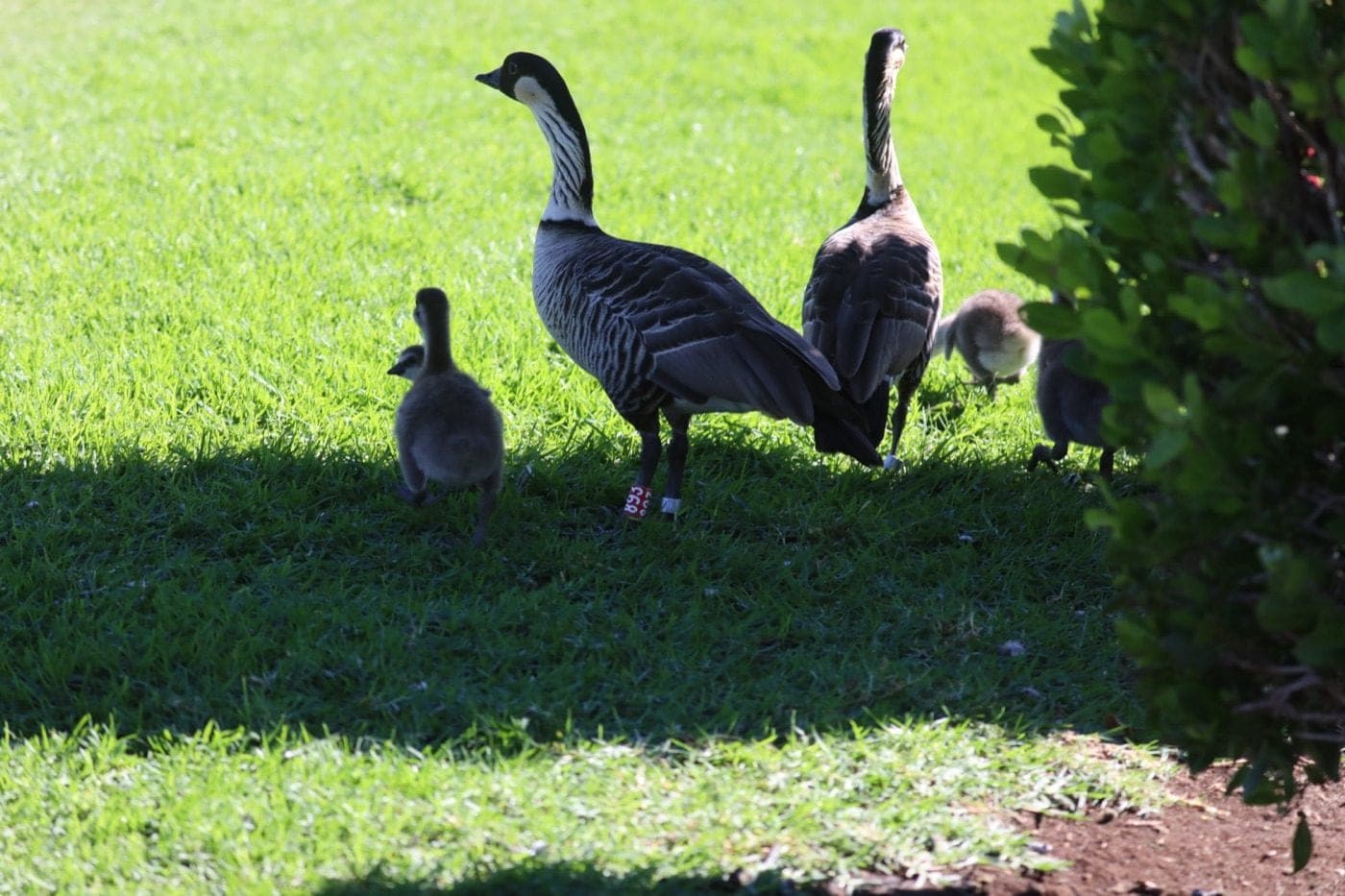
approx. 500–2,000 ft · Lowland
Parks, pasture, and golf courses
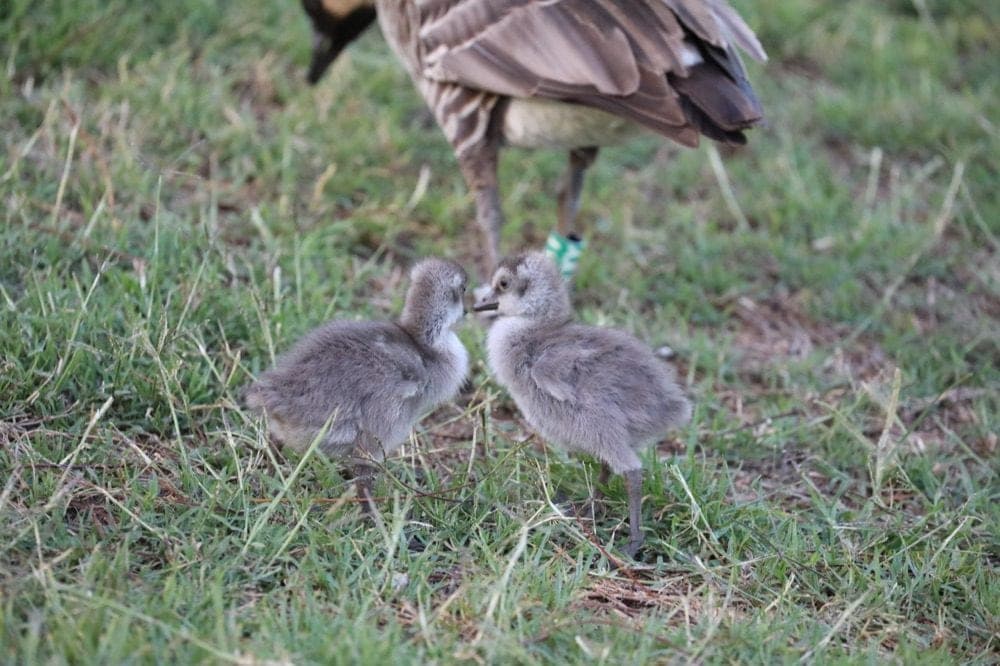
Many of today's nēnē raise goslings on mown grass in parks and on golf courses. People, pets, and roads are always close by.
What threatens them hereFeral cats, mongoose where they live, and vehicle strikes.
Feral cats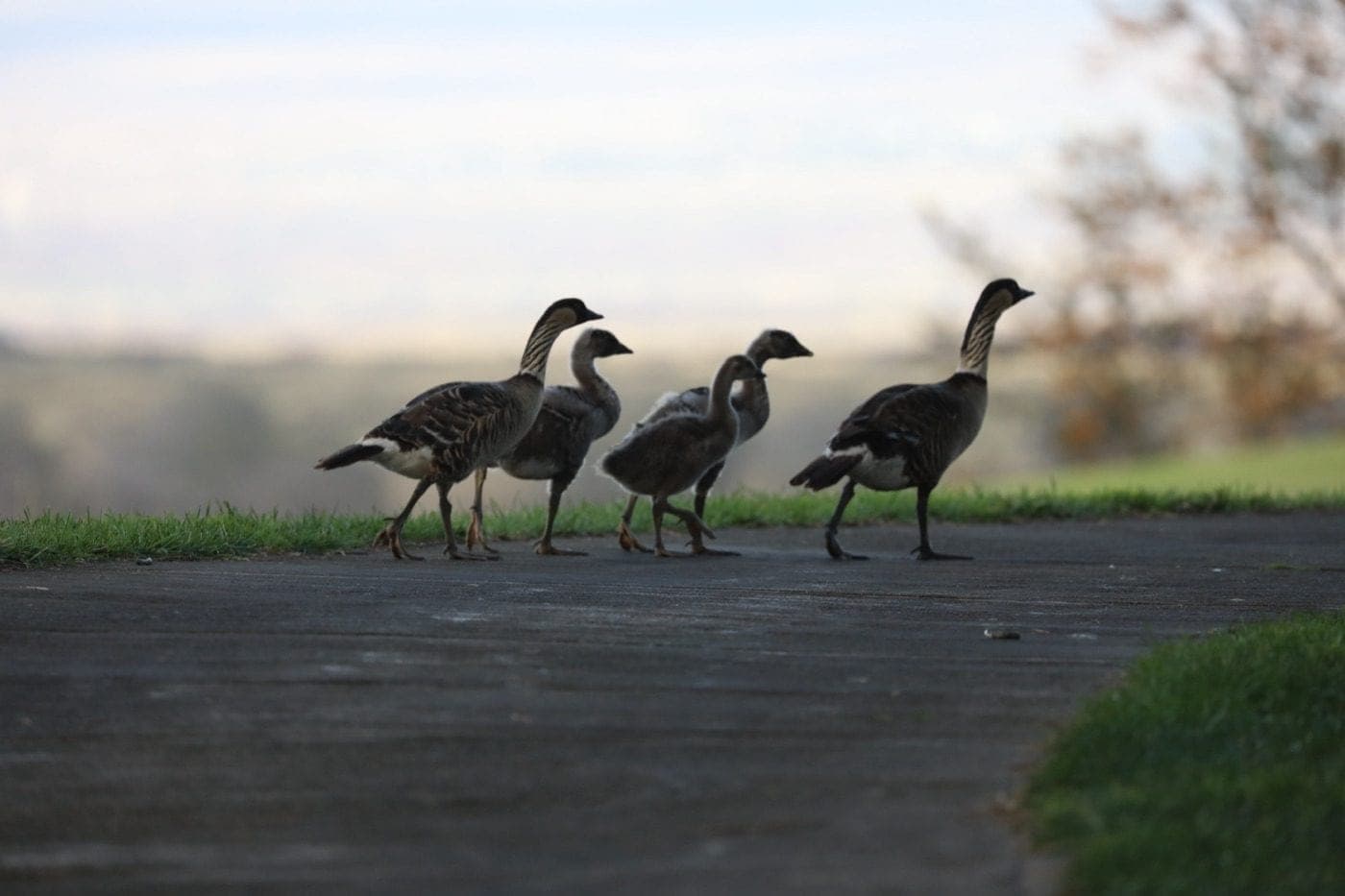
approx. 2,000–4,000 ft · Upland
Ranchland and forest edge
Some nēnē move between higher and lower ground through the year. Resights of banded birds show where a family goes.
What threatens them hereMongoose and feral cats at nests.
Mongoose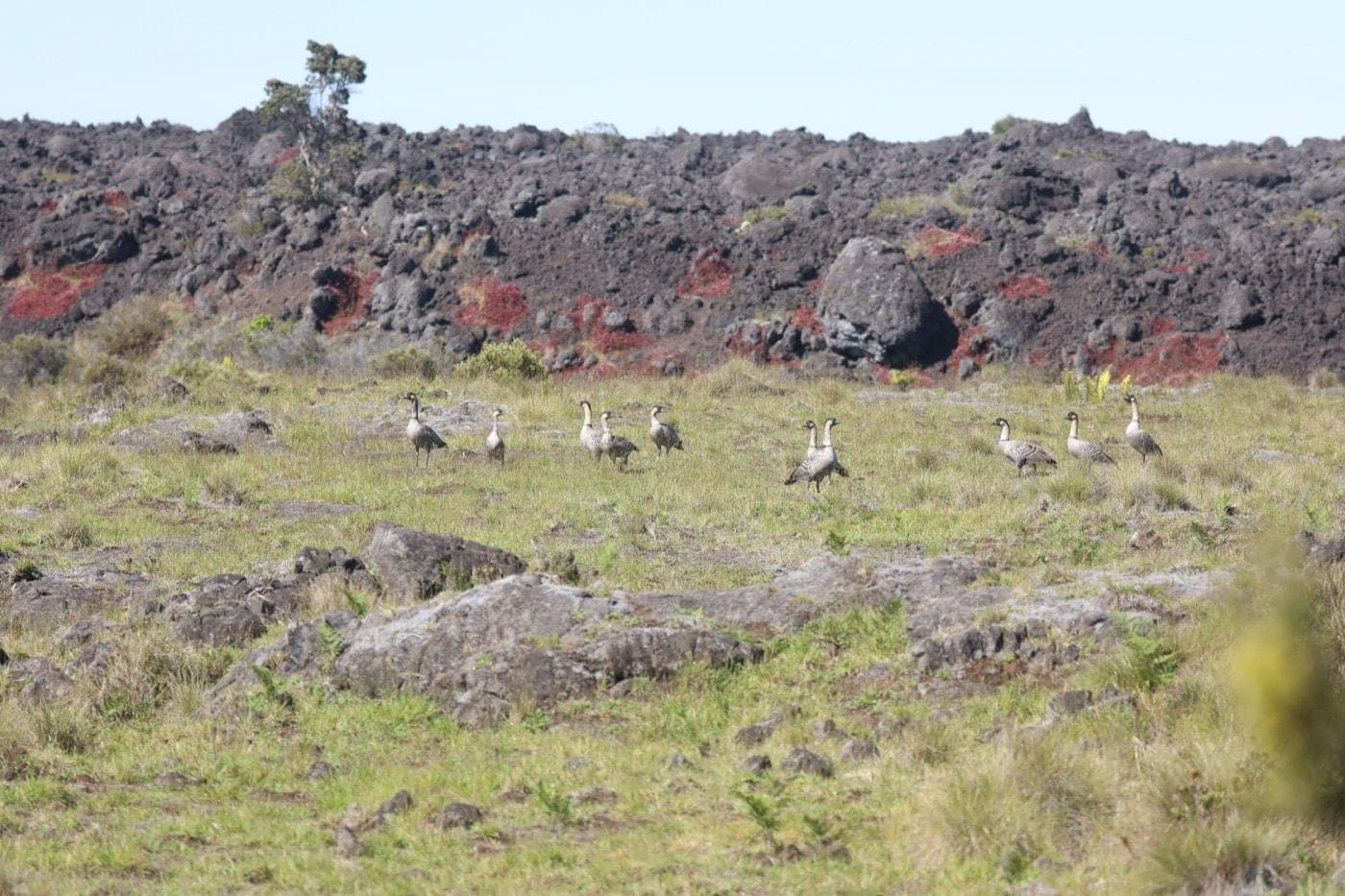
approx. 4,000–6,000 ft · Lava & kīpuka
Lava flows and kīpuka
Nēnē use young lava flows and kīpuka, the islands of older vegetation that flows leave behind. Their feet are only partly webbed, an adaptation for walking on lava.
What threatens them hereMongoose, feral cats, and dogs.
Predator control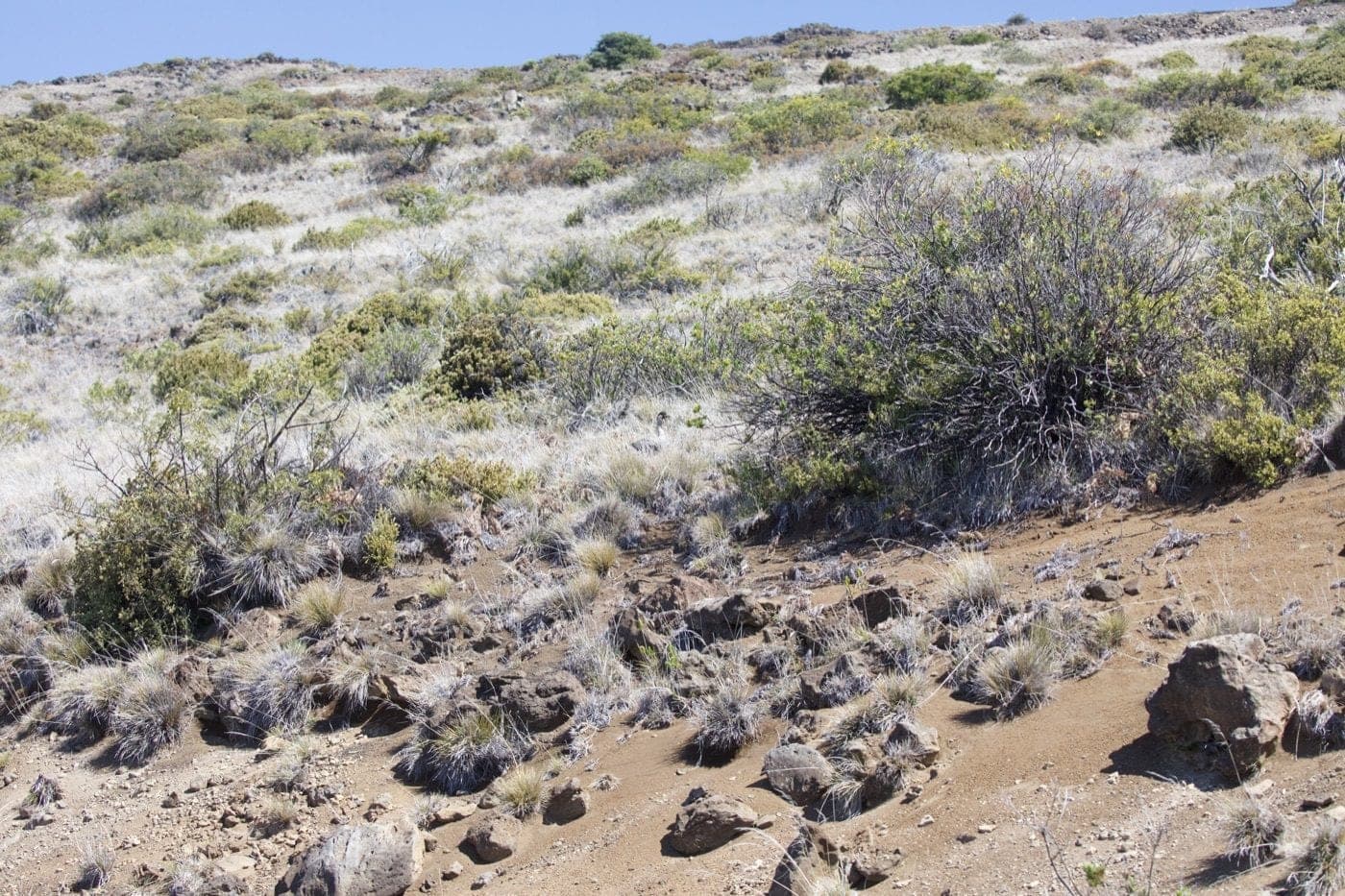
approx. 6,000+ ft · Subalpine
Subalpine shrubland
On Haleakalā, nēnē live from about 5,500 feet to above 8,000 feet, in open shrubland and grassland. The ground is cinder and rock.
What threatens them hereFeral cats and mongoose.
All threatsSolar cameras that read bands, so birds aren't disturbed.
Solar-powered cameras in the field photograph passing nēnē, so the codes on their leg bands can be read without handling a bird. They also watch for predators like mongoose. The aim is better population estimates.
01 Power
Solar-powered units, set up far from the grid.
02 Watch
Cameras photograph birds that pass by, and watch for predators like mongoose.
03 Read
Band codes are read from the images, not by handling birds.
04 Count
Every read is logged as a resight of that individual bird.
05 Act
Auto-resetting traps are moved to where nests need them.
- remote cameras deployedSource: Nēnē Research & Conservation field records · as of Oct 2026
- 11
- mongoose removed since March 2023Auto-resetting traps, moved to maximize nesting successSource: Nēnē Research & Conservation trap records · as of Oct 2026
- 1,131
- nēnē sightings in our databaseSource: nene.org database · as of Oct 2026
- 22,992
We don't publish camera images or locations. Showing where cameras are would point people to nesting birds and to equipment we can't easily replace.
How the remote network worksConservation you can carry.
Anyone with a phone can add a sighting. A band code lets us match it to an individual bird.
- ReportLog a sighting with a photo, a place, and a band code if you can read it.
- KiloAn iOS field app, in beta with Nēnē Recovery Action Group members, that keeps a banded bird's sightings and injury reports in one record.
- AdoptPair with one banded bird and follow its resight history.
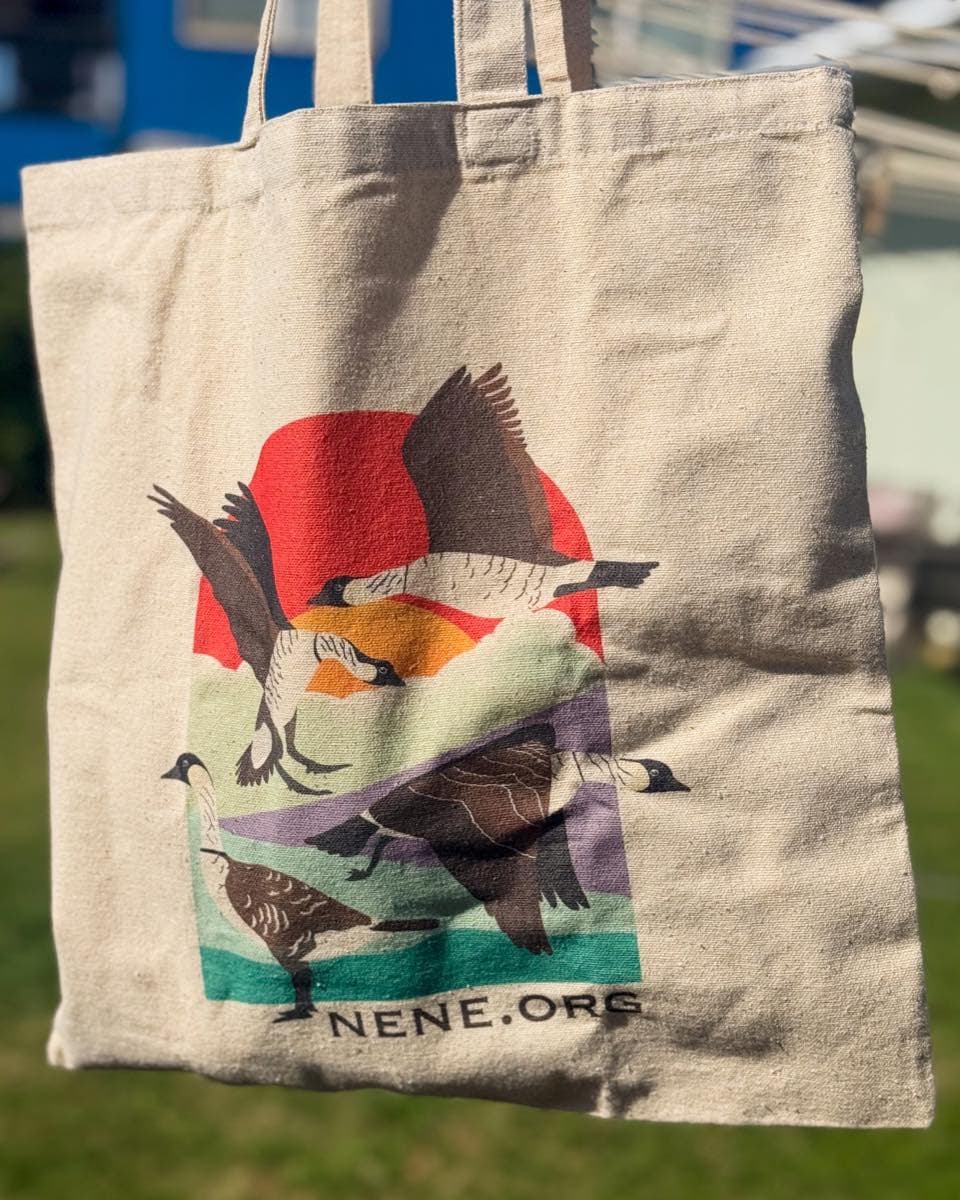
Wear the mission, from the Nēnē Store
Shirts, stickers, and totes designed in-house. Profit from the shop supports our field work.
Get involved
Three ways to help.