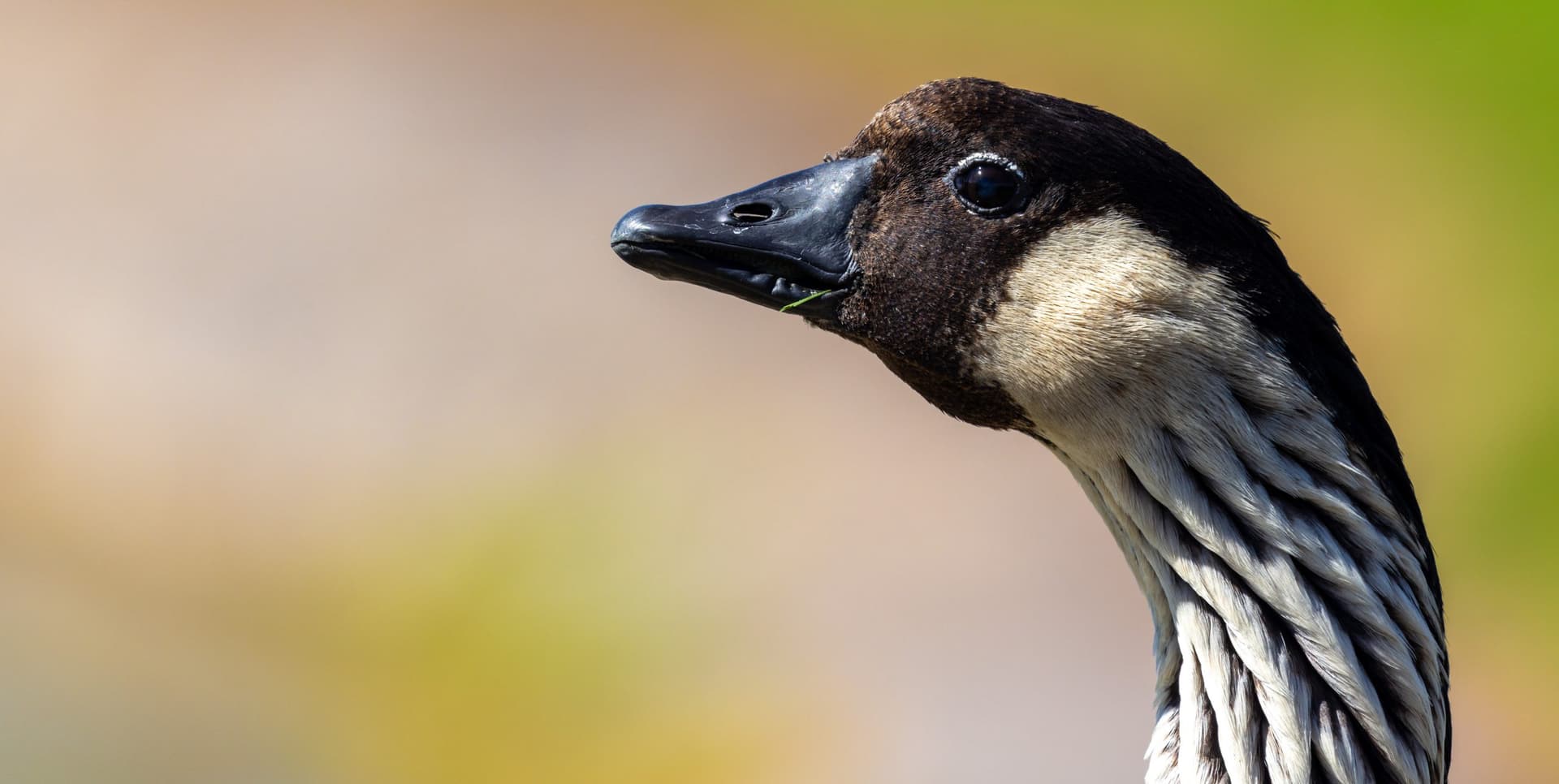
Nēnē conservation
How Hawaiʻi's state bird came back, and the work that isn't finished yet.
A recovery still in progress
Nēnē (Branta sandvicensis), Hawaiʻi's state bird since 1957, was down to about 30 wild birds on Hawaiʻi Island by 1949 (Smith 1952). Captive breeding at Pōhakuloa and at the Wildfowl & Wetlands Trust in Slimbridge, decades of predator control, fencing, and reintroductions on multiple islands brought the wild population up to about 4,323 birds across five islands by 2025 (NRAG count).
That number hides an uneven picture. Kauaʻi, the only major island without an established mongoose population, holds roughly 61 percent of the statewide total and is still growing. Maui and Molokaʻi have lost ground. The federal government downlisted nēnē from endangered to threatened in 2019 (effective January 2020), but the State of Hawaiʻi still lists the species as endangered under HRS 195D. The work is not finished.
Explore nēnē conservation
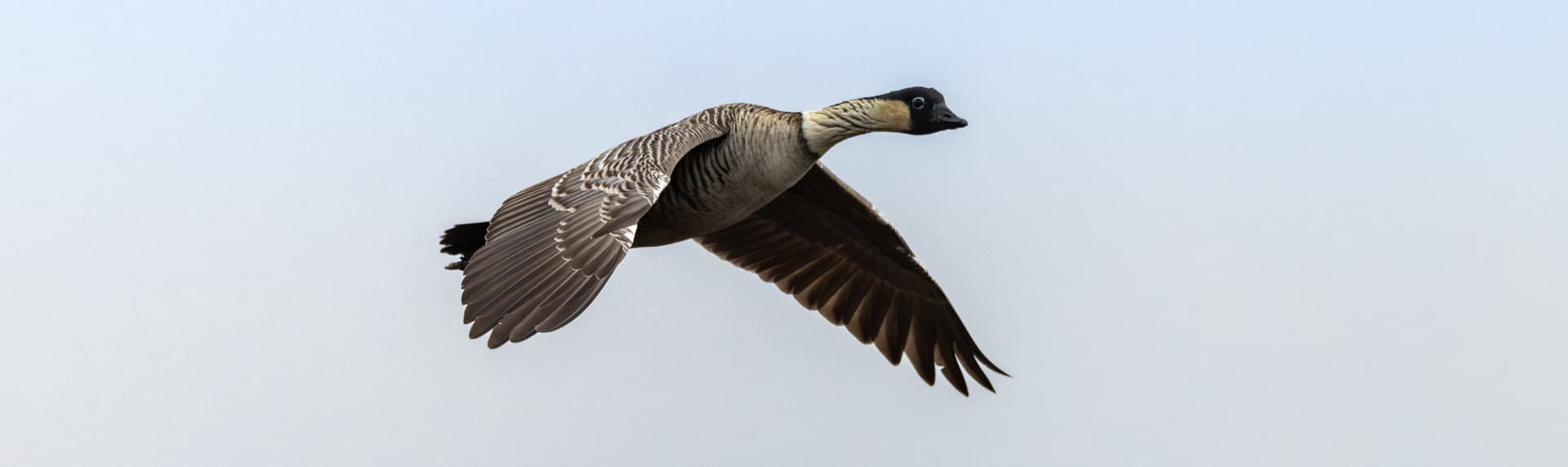
Conservation timeline
Pre-contact range, the 1949 low point, captive breeding, reintroductions, the 2019 federal downlisting, and the most recent statewide counts.
View timeline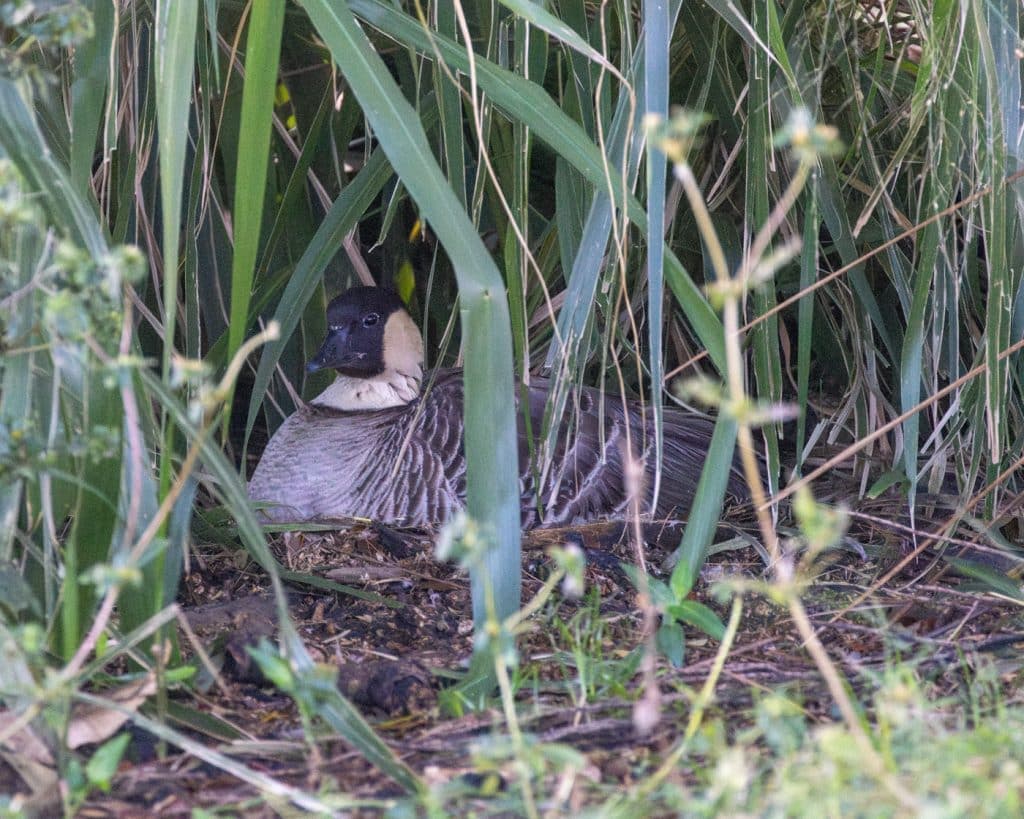
Conservation resources
Recovery plans, 5-year reviews, peer-reviewed papers, theses, and agency documents. More than a century of nēnē research in one place.
Browse resources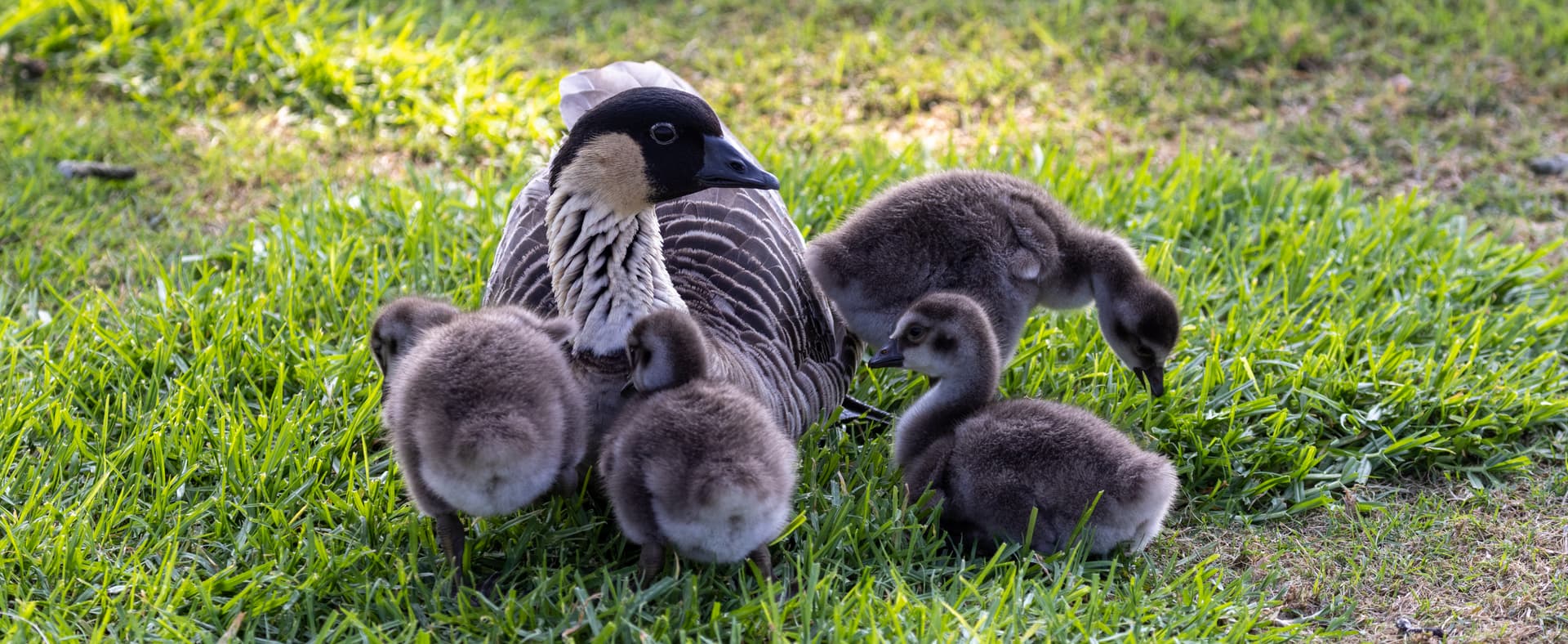
Key contributors
The people and organizations behind nēnē recovery. Herbert Shipman, Sir Peter Scott, USFWS, DOFAW, the National Park Service, and the Nēnē Recovery Action Group.
Meet contributorsNēnē by the numbers
~30
Wild nēnē in 1949, all on Hawaiʻi Island (Smith 1952)
4,323
Statewide count in 2025 (NRAG)
1957
Named Hawaiʻi's state bird
2019
Federally downlisted to threatened; still state-endangered under HRS 195D
Help protect the nēnē
Nēnē are still a conservation-reliant species. Predator control, fencing, road awareness, biosecurity. All of it has to keep happening, basically forever. Reporting a sighting or backing this work helps keep that infrastructure in place.